
Using AI Hallucinations to Evaluate Image Realism
New research from Russia proposes an unconventional method to detect unrealistic AI-generated images – not by improving the accuracy of large vision-language models (LVLMs), but by intentionally leveraging their tendency to hallucinate. The novel approach extracts multiple ‘atomic facts' about an image using LVLMs, then applies natural language inference (NLI) to systematically measure contradictions among […]<br /> The post Using AI Hallucinations to Evaluate Image Realism appeared first on Unite.AI. [...]
Rating
Innovation
Pricing
Technology
Usability
We have discovered similar tools to what you are looking for. Check out our suggestions for similar AI tools.
Google researchers introduce 'faithful uncertainty', allowing LLMs to offer best guesses instead of hallucinations
Large language models continue to struggle with hallucinations, presenting a major roadblock for real-world enterprise applications. Reducing these errors is a messy business, forcing model developers [...]
Forget typosquatting; slopsquatting is the software supply chain threat created by AI coding tools
Slopsquatting represents an emerging supply chain threat made possible by AI hallucinations. As developers increasingly rely on AI coding assistants, they unknowingly grant cybercriminals access to th [...]
Open source Qwen-Image-2512 launches to compete with Google's Nano Banana Pro in high quality AI image generation
When Google released its newest AI image model Nano Banana Pro (aka Gemini 3 Pro Image) in November, it reset expectations for the entire field. For the first time, uses of an image model could use na [...]
GPT-5.3 Instant cuts hallucinations by 26.8% as OpenAI shifts focus from speed to accuracy
OpenAI's GPT-5.3 Instant — the company's most widely used model — reduces hallucinations by up to 26.8% compared to its predecessor, prioritizing accuracy and conversational reliability [...]

Ideogram 3.0's AI image generator gets a realism boost and new editing tools
Ideogram's AI image generator gets a major upgrade, promising more realistic images, a wider range of styles, and a set of new editing tools. Developers can now tap into these features through a [...]
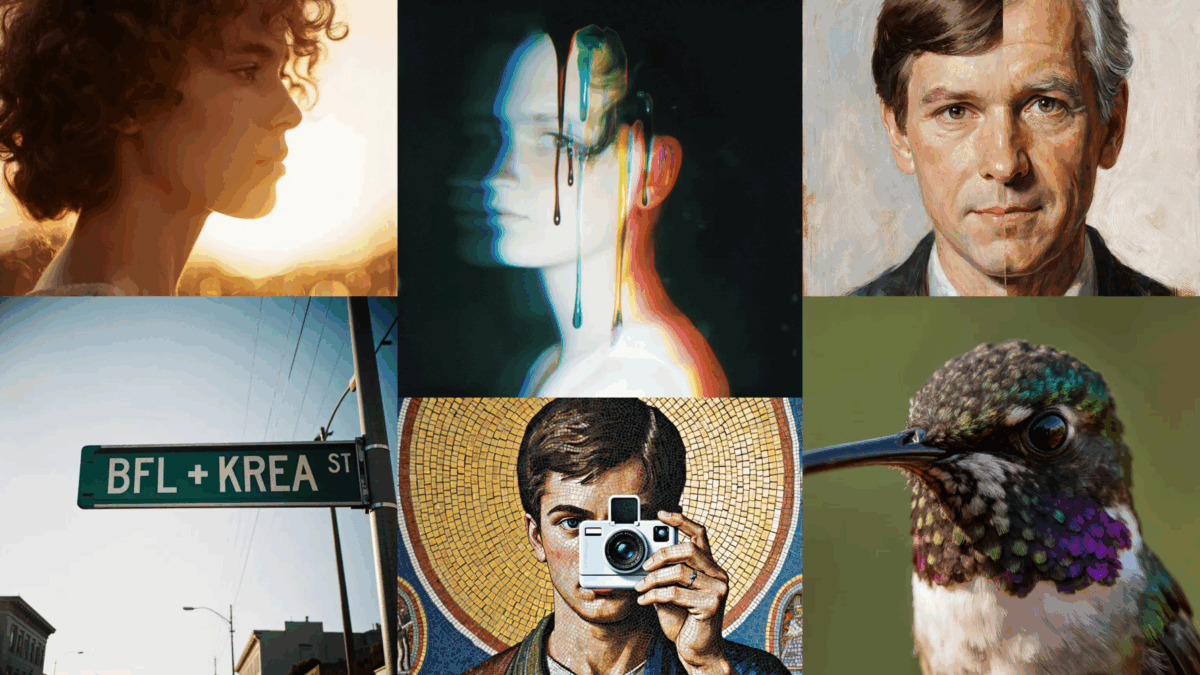
BFL and Krea release FLUX.1 Krea: Open image model designed for realism
Black Forest Labs and Krea AI have released FLUX.1 Krea [dev], an open text-to-image model designed to generate more realistic images with fewer of the exaggerated, AI-typical textures.<br /> Th [...]
Lean4: How the theorem prover works and why it's the new competitive edge in AI
Large language models (LLMs) have astounded the world with their capabilities, yet they remain plagued by unpredictability and hallucinations – confidently outputting incorrect information. In high- [...]